
I am helping to tackle Uganda’s measles outbreak
Prossy Namuwulya, a molecular scientist, is at the heart of surveillance, analysis and data sharing.
By
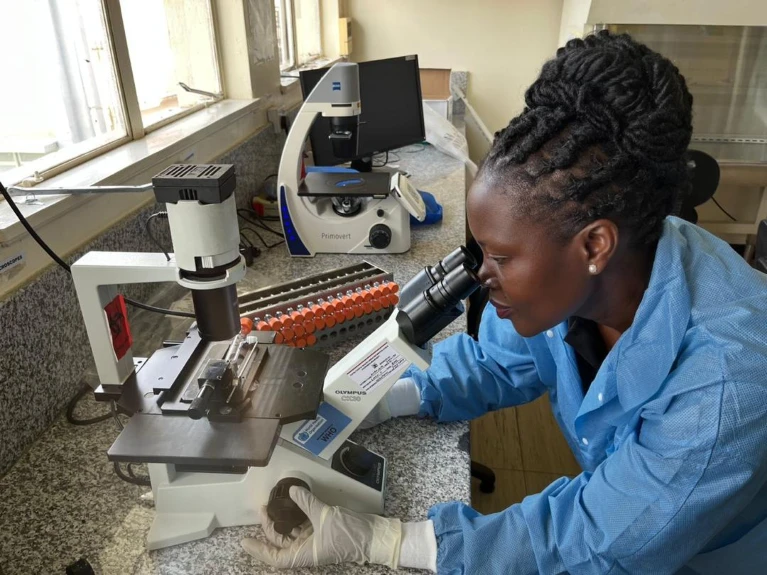
At the Uganda Virus Research Institute (UVRI), we are fighting an important battle against measles every day, and I work under the country’s Expanded Programme on Immunization (EPI) to control and eliminate the disease. We help the immunisation programme by testing all suspected measles cases in the country and providing the data that helps decide the next steps.
I also conduct molecular surveillance to detect measles genotypes in Uganda, which is crucial for understanding the spread of the disease. If the vaccination programme is working well, we won’t have any circulating genotypes. The vaccine should eliminate all the measles in Uganda. However, we are dealing with two strains — the epidemic B3 and the D8. The presence of these strains highlights gaps in the vaccination coverage, and this is where my work becomes even more important.
Every day, I train interns, students, and volunteers in molecular techniques, sharing both local and global findings to ensure Uganda’s findings contribute to the global efforts to track and eliminate measles. We register the samples we receive in the database and then run various tests, perform analysis, and share it in the immunization programme. The data generated at our laboratory is shared in a central database, which informs the world about the status of measles across different continents.
While conducting research for my PhD, I found that nearly 98% of people infected with measles had either never been vaccinated or were under-vaccinated as policy recommends two doses of the vaccine.
Many people say they are vaccinated, but they don’t have any record. Without reliable vaccination records, it is impossible to accurately track who is protected. We need to work with policymakers, the media, and the public to raise awareness about the importance of vaccination, combat misinformation, and ensure the safety and efficacy of the measles vaccine.
As Uganda continues to experience a measles outbreak, we have to push the message that vaccination works. However, misinformation and fear, especially after COVID, has led to vaccine hesitancy, and a decline in coverage. I am particularly concerned about the resurgence of measles in countries like the United States, where the disease had been previously eliminated. We need to be more proactive.
Measles can affect anyone, regardless of age, and it weakens the immune system, leaving people vulnerable to other infections. At UVRI, even the lab staff are revaccinated upon arrival, regardless of their previous vaccination status. We’ve seen many adults who thought they were protected, only to discover they had never been vaccinated,.
With the global health landscape changing, particularly due to reductions in funding and USAID cuts, my work is becoming more difficult. Surveillance efforts are affected. This disruption has led to more uncontrolled outbreaks, as the vital work of collecting and transporting samples from suspected cases to the lab has been delayed..
Despite these challenges, I remain optimistic and believe that Uganda and Africa as a whole must rely more on local resources and collaborate more effectively across research institutions. We have to work as a team, share knowledge, and develop our own scientific networks.
If we are to succeed in fighting measles and other diseases, we must work together so Uganda and the world can make lasting progress in eliminating these preventable diseases.
doi: https://doi.org/10.1038/d44148-025-00192-4
References
- Paolin, E. et al. J. Am. Chem. Soc. 147, 8 (2025)
- Elnaggar, A. Herit. Sci. 12, 7 (2024)