
Growing waste, rising risks: Masese dumpsite threatens Jinja communities
At Masese dumpsite in Jinja, waste sustains livelihoods while quietly endangering lives. As the site exceeds its capacity, women and nearby residents face mounting health risks amid gaps in urban waste management.
- Sharon Muzaki
- January 12th, 2026
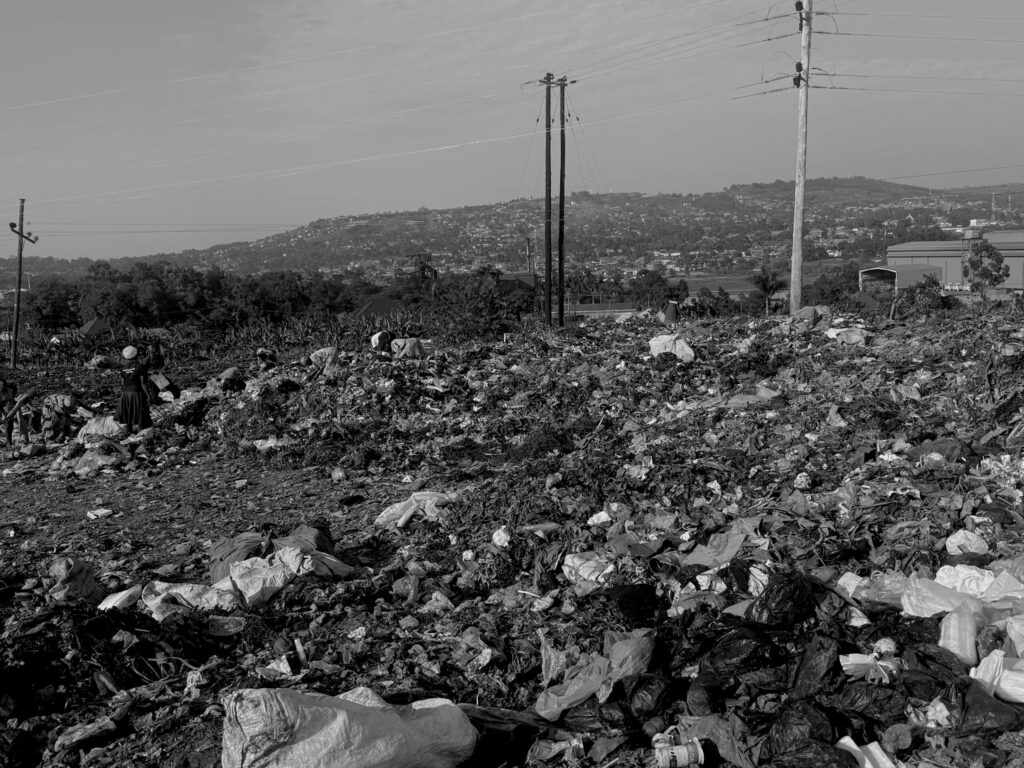
Across Jinja, the Masese dumpsite exposes women and children to severe health risks while sustaining their livelihoods, highlighting the intersection of poverty, gender inequality, and environmental mismanagement.
At the edge of Jinja City, the Masese dumpsite spans roughly 11.8 hectares in Masese III, a residential area of Walukuba Division, about four kilometres from the city centre and a few kilometres from Lake Victoria.
Once intended as a controlled landfill, the site has become both a lifeline and a growing threat. Each day, trucks unload tonnes of mixed waste from markets, households, schools, hotels and industries, while nearby residents live with the smell, contamination and constant fear of disease.
Living from the dumpsite
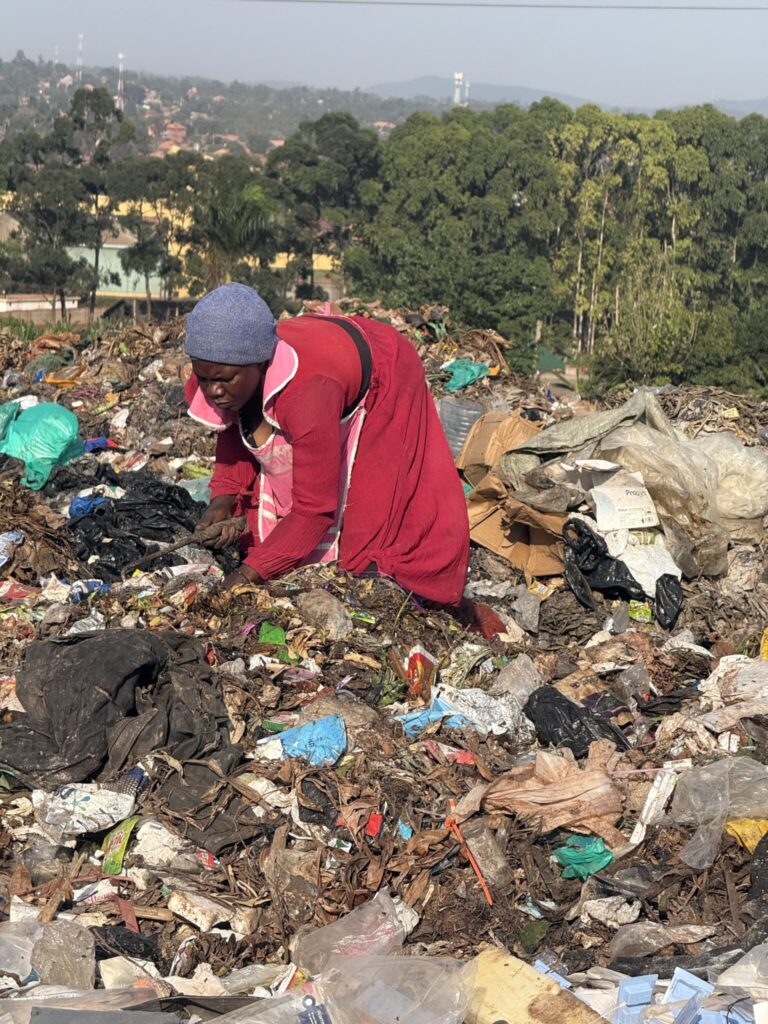
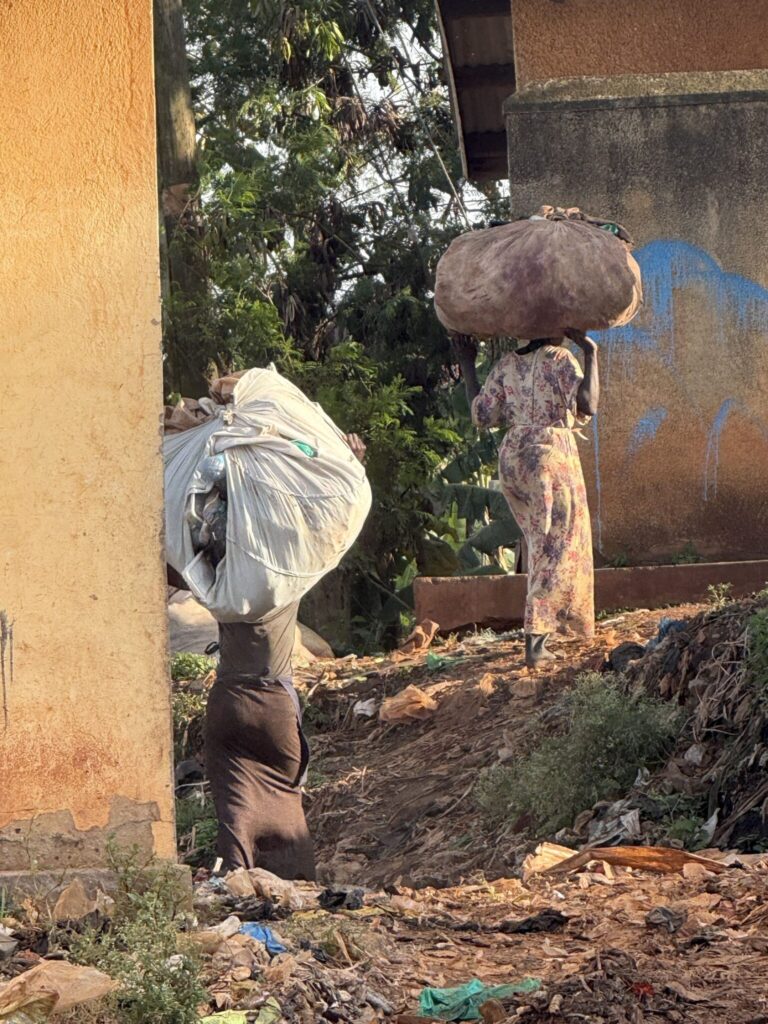
For women who depend on picking waste to feed their families, the dumpsite is both work and risk. Florence Nabirye, 40, a mother of three and a resident of Jinja City, has spent the past 20 years collecting waste to survive.
“I wake up at 6 a.m. every day to go and pick waste, often with my children, especially during school holidays,” she says. “This is my only source of income. It is how I educate my children and buy food for them. From the beginning of the year until the end, this is what I do because I have nothing else to do.”
Nabirye explains that individuals, not companies, buy the waste she collects. “We mainly pick polythene bags. Ten kilograms sell for 1,000 Ugandan shillings,” she says.
Health risks and daily exposure
When Nabirye first started working at the site, her health suffered. “I fell sick with diarrhoea and was admitted to hospital for two weeks,” she recalls. “But over time, my body adapted, and I no longer experience stomach problems.”
The dangers, however, remain constant. “The biggest challenge we face is the daily injuries from syringes and sharp objects that cut us all the time,” she says. She adds that she sometimes deworms herself, but not regularly.
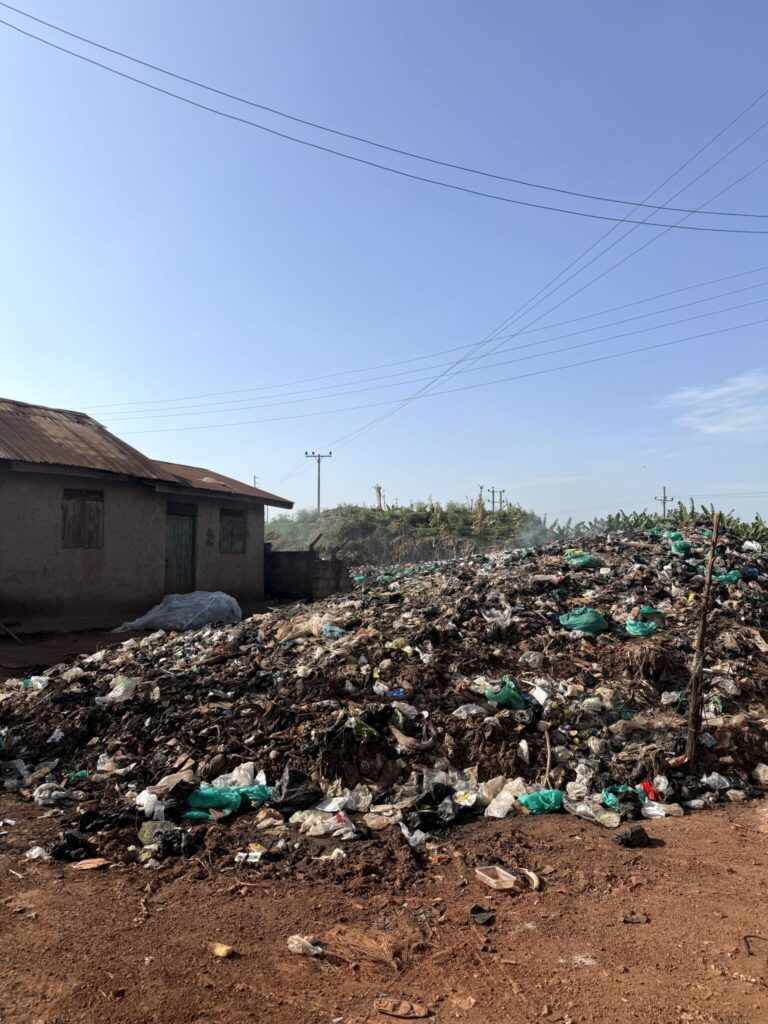
Another resident, Musa Waiswa, says the dumpsite has transformed the area entirely. “This used to be a road where cars could take shortcuts to the main road,” he explains. “Authorities tried to stop the dumping, but it was already too late.”
According to Waiswa, dumping has continued for years. “For the past four years, city council trucks have been dumping waste here. Individuals do it too, but mostly it is the city council.”
Residents have repeatedly raised complaints, he says, with no results. “We have forwarded our concerns many times, but no solution has been provided. We have almost given up.”
Why the system is failing
Mark Mpadwa, an environmental scientist at Jinja City Council, confirms that Masese is not a properly constructed landfill.
“What we have is a dumpsite, not a landfill,” he says. “Under normal circumstances, this would be considered illegal. But due to limited funding, there are many gaps in waste management. The site is already beyond its intended capacity, and if nothing changes, it could become a serious environmental and public health hazard.”
He says the problem begins at the community level. “Waste is not separated properly. Organic materials are mixed with plastics of different densities, and low-density plastics cannot be recycled effectively. This results in large volumes of mixed waste ending up at the site.”
Mpadwa also highlights the risk posed by methane, produced during the decomposition of biodegradable waste. “Methane is a greenhouse gas that poses health risks to people working at the site and to residents living within 200 metres of it,” he says.
Limits of local governance
Kenneth Nandala, a senior health inspector at Jinja City Council, says diarrhoea is the most commonly reported illness among nearby residents and informal waste pickers, alongside cuts, tetanus risk and skin conditions.
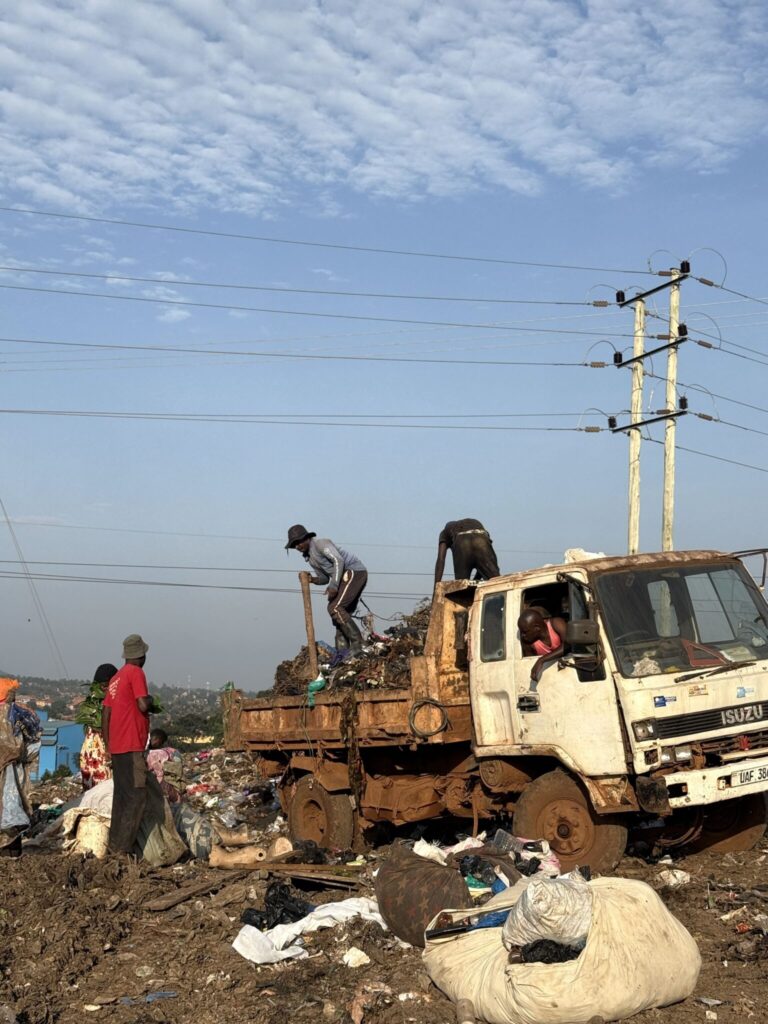
“These individuals are not council employees; they are community members who access the site to collect items they consider valuable,” he explains. “Because the dumpsite lacks fencing, anyone can enter. This unrestricted access increases health risks.”
Nandala says more than ten trucks of waste are dumped at Masese daily. “If collection stops even for a day, the town quickly becomes unsanitary,” he says, adding that the site does not meet public health standards.
Maria Kasasa, deputy mayor of Jinja’s Southern Division, says there are no structured programmes to support women who pick waste. “This is done at an individual level,” she says. “Some women are not licensed or known. They just go to the site to provide for their families.”
She adds that behaviour change remains a major challenge. “The government has policies, but sometimes the public is not ready to follow them.”
National oversight and responsibility
At the national level, Barirega Akankwasah, executive director of the National Environment Management Authority (NEMA), says Uganda must rethink how it views waste.
“Waste is wealth,” he says. “It can be turned into fertiliser, briquettes for energy, electricity and recycled materials. The solution lies in separating waste at the source and adding value.”
Akankwasah says NEMA monitors waste facilities and enforces environmental law where necessary. “Our decisions are guided by the law, not by politics or economic pressure,” he says, adding that environmental compliance information is available to the public under the Access to Information Act.
What change would look like
From a community perspective, Sharon Biira, advocacy lead at Girls for Climate Action, says the dumpsite reflects deeper inequalities.
“This is not just an environmental problem,” she says. “It is about gender inequality and unemployment. Women are exposed to serious health risks just to earn as little as 1,000 shillings a day.”
Biira argues that waste separation must start at household level and that women should be central to solutions. “They already understand the problem because they live it every day,” she says.
For local authorities, the path forward involves investment in infrastructure, enforcement of waste separation and long-term alternatives to dumping.
As Jinja continues to grow, the risks at Masese highlight what happens when waste management systems fall behind urban reality — and how urgently change is needed to protect both livelihoods and public health.